
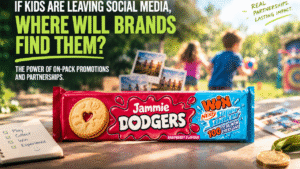
The Grocer recently asked an important question: “How will brands reach kids after the social media ban?” Its analysis highlights the challenge facing food and drink brands as the route to under-16s through social media is set to close and argues that brands will need to adapt by looking back towards the real world.
The question is particularly relevant given the UK Government’s plans to prevent social media platforms from offering their services to under-16s, with the restrictions expected to come into force in spring 2027. The Government has also highlighted greater access to sport, creative activities, nature and the arts as part of its wider approach to children’s lives online and offline.
For parents, the debate is understandably centred on safety.
For marketers, there is another question:
If one of the most powerful channels for reaching young audiences becomes restricted, where does attention go next?
Our view is that this could create a significant opportunity for partnerships. Not sponsorship in the traditional sense.
But partnerships that connect brands with the things children and families already care about: sport, entertainment, characters, gaming, experiences, products, retail and participation.
The opportunity isn’t to replace social media
The obvious response would be to find another digital channel.
But those risks missing the bigger opportunity.
Children don’t only exist online.
They play football. They go to the cinema. They visit attractions. They collect things. They watch films. They read. They play games. They go shopping with their parents. They attend events. They follow teams, athletes and characters.
These are all potential points of connection between brands and young audiences.
And importantly, they are often shared experiences between children and their parents.
That creates a different relationship from simply appearing in a feed.
The brand can become part of what the child is doing, rather than another piece of content competing for their attention.
Sport: from sponsorship to participation
Sport is perhaps the clearest example.
A sports partnership can give children something to do, rather than simply something to watch.
Kellogg’s Football Camps is a good illustration. The campaign has used partnerships with major football properties to get children active and create experiences around the sport.
That is fundamentally different from buying advertising around a football match.
The partnership is the platform.
The brand helps create the experience.
And the child becomes a participant.
We are also seeing brands use sport to connect directly into products and retail. Cheestrings, for example, has used youth football partnerships to create football-themed packs, with quizzes, jokes and challenges built into the product.
That takes the partnership from the pitch to the supermarket shelf and, ultimately, into the home.
It is exactly the kind of thinking brands should be exploring.
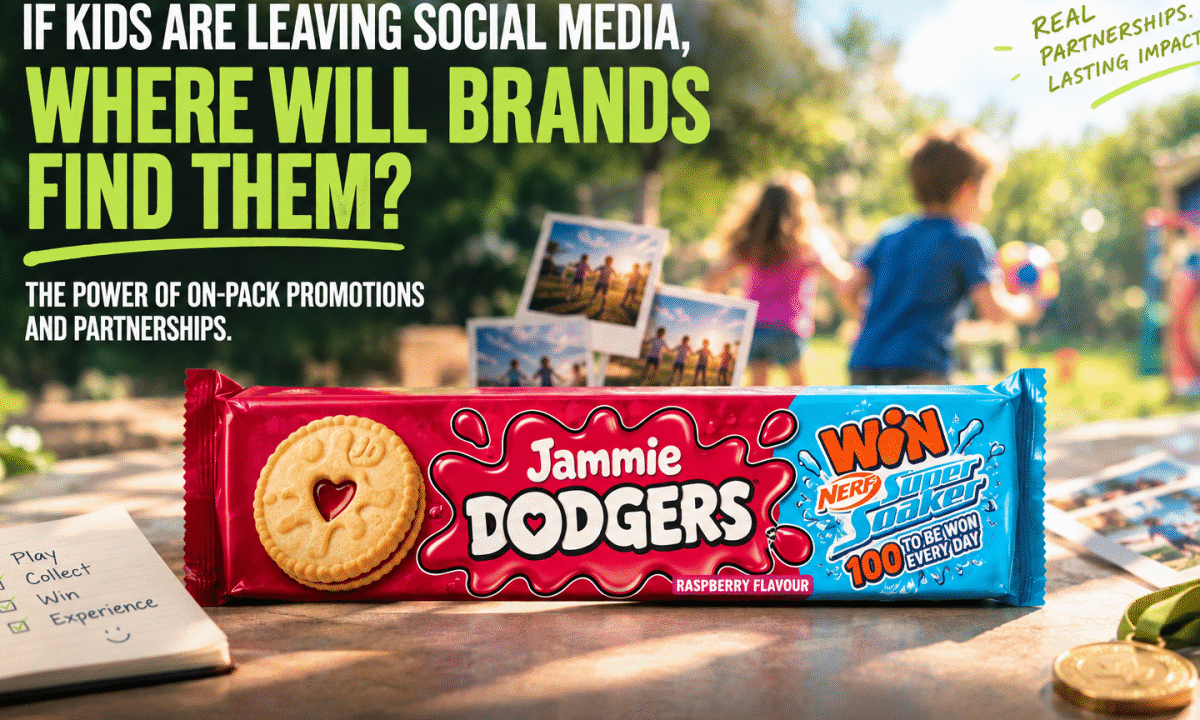
The pack becomes media
If brands have fewer opportunities to reach children through personalised social content, physical products become increasingly interesting.
The pack is already in the home.
It is already in the supermarket.
It already has the consumer’s attention at the point of purchase.
So why shouldn’t it become a piece of media?
A pack can carry:
- A character
- A competition
- A collectible
- A ticket
- An experience
- A QR-led activation
- A sports promotion
- A loyalty reward
Coca-Cola’s World Cup activity with Panini is a good example of how a product can become part of a wider cultural moment through collectible stickers incorporated into bottle labels.
The important point is that the partnership isn’t confined to the sponsorship property.
It travels from sport to product to packaging, in-retail and to homes.
And this is where the lines between sponsorship, promotion, licensing, retail and product innovation increasingly disappear.
The most interesting partnerships aren’t confined to one marketing channel. They move.
Entertainment and IP can create the same effect
The other huge opportunity is entertainment IP.
Characters and franchises have something that conventional advertising doesn’t necessarily have: existing emotional equity.
Children already know the character. They already want to watch the film. They already play the game. They already want the toy.
The role of the brand is to find a credible way to become part of that world.
We’ve seen this repeatedly across the market, from Pokémon and Bluey through to Minions, Disney and major gaming franchises.
At Reg&Partners, we’ve seen first-hand how this can work across IP, licensing and brand partnerships, connecting properties such as Hasbro and Penguin Random House IP with brands to create opportunities that extend well beyond a traditional licensing deal.
The most effective examples create a chain:
This is where collaborations become powerful
The growth of brand collaborations is another signal. For younger audiences, this becomes particularly interesting. Imagine a food brand partnering with:
A sports property to create an on-pack competition and grassroots participation programme.
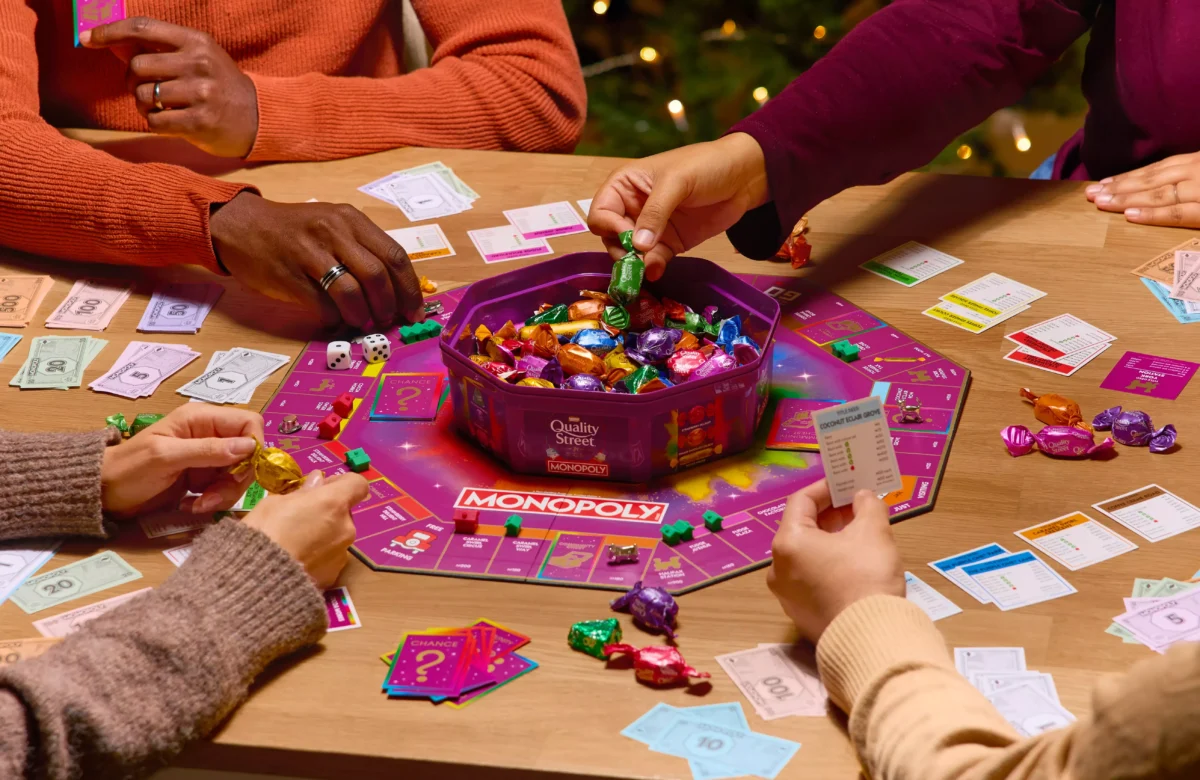
An entertainment franchise to create a limited-edition range and collectible promotion.
A retailer to create an in-store experience.
A family attraction to give away tickets.
A gaming property to create an experience that connects physical and digital worlds.
What this means for marketers
At Reg&Partners, we see the opportunity sitting across several interconnected areas.
Sport: from major properties and teams through to grassroots participation and youth sport.
Entertainment: film, TV, gaming, attractions and cultural moments.
IP & licensing: characters and franchises that can move from screen to shelf.
On-pack promotions: competitions, collectibles, prizes, tickets and experiences.
Product collaborations: creating something consumers actively want to buy.
Retail: bringing partnerships into stores and turning the point of purchase into an experience.
Experiential: giving families something memorable to participate in.
Loyalty: creating an ongoing relationship rather than a one-off campaign.
The strongest opportunities increasingly sit at the intersection of these areas.
Because the real value of a partnership isn’t necessarily the logo.
It is the audience, the relevance, the experience and the ability to give people a reason to engage.
The brands that create participation will win attention
The social media restrictions will create challenges for brands accustomed to reaching children through digital platforms.
But they could also force a useful rethink.
The opportunity is to put brands back into the places where childhood actually happens — on the football pitch, in the supermarket, at the cinema, at an attraction, on the kitchen table and inside the products children love.
At Reg&Partners, we work with brands and rights holders to develop partnerships across sport, entertainment, IP, licensing, on-pack promotions, retail, experiences and loyalty.
If you’re exploring new ways to engage children and families, contact us to discuss an array of partner opportunities.