

Ok so that didn’t end how we hoped. But its important not to lose sight of what a major tournament brings.
Every major tournament produces the same headline: a single, tidy figure for how much the World Cup is “worth” to an economy. For example, FIFA put the number at $30.5 billion for the US this summer. UK retail bodies put England’s quarter-final run at roughly £500m in extra pints, takeaways and TV sales. Both numbers are real in the sense that someone modelled them. However, neither comes close to capturing what actually happens.
Forbes reported this week that FIFA’s $30.5bn US projection is unravelling. International arrivals in June were essentially flat (+0.2%), down from Europe and Asia, the visitors who spend the most. Meanwhile, FIFA itself is on track to pocket around $9bn in revenue. As NC State’s Michael Edwards put it: “FIFA’s model is FIFA gets the revenue, and host cities bear the costs and the risks.” Host cities each sank $100–200m into infrastructure and security. They waived tens of millions in tax revenue. Additionally, they are now watching the “50/50 domestic-international split” FIFA promised them fail to show up in the data. His line stays with you: visibility does not equate to economic impact.
The UK number tells a narrower version of the same story, and it’s a genuinely striking one. For instance, GlobalData and VoucherCodes.co.uk projected the quarter-finals would add £493.6m to the UK economy in a single round. £385m of that was tied to the England-Norway game alone, split roughly £280m retail and £105m hospitality. Pub sales run 77% above a normal Tuesday on matchdays (UKHospitality). The BBPA pegged Saturday’s fixture at £27.5m from an extra 5.5m pints poured. Boxpark’s tickets for the quarter-final sold out within hours of going live at 5am. Its CEO said the company had only budgeted as far as the last 16. Therefore, “everything now is a bonus.” AO.com reported TV sales up 23% year-on-year through June. Deliveroo orders nearly doubled overnight during the Mexico game. Tesco’s Whoosh service saw ice-cream sales up 64% and lager up 44%. O2 clocked a 24,581% spike in iPlayer traffic at 4am for the final whistle. Moreover, Uber traffic was up 192.6% straight after.
All of that is real, and all of it is one thing: consumer spend on the day, match by match. It’s a live illustration of exactly the point England’s run keeps proving. Every match they stay in produces another spike. In addition, there is another round of “everything now is a bonus.” But none of it says anything about what happens in the weeks before and after that match. It doesn’t capture what happens in the rooms where brands, agencies and venues actually build the campaigns that ride on England’s run.
That’s the number nobody is modelling. And it’s the one we sit inside every day.
What the top-line figure misses
Every time England win a match and stay in the tournament, there’s a compressed, high-stakes scramble that never appears in any economic impact report. Briefs get rewritten overnight, agencies get matched to brands at speed, activation teams that were planned for one week suddenly need to run for two. Meanwhile, PR and storytelling teams are trying to turn a 90-minute match into a fortnight of relevant content. None of that shows up in pints sold or hotel occupancy. Instead, it shows up in briefs won, deals brokered, activations delivered and campaigns that either land in the moment or miss it entirely.
As part of the Ingenuity Group, we’ve been on the inside of that scramble this summer. Ten sponsorship and brand partnership deals, this tournament alone, none of which will ever touch a GDP model:
- Our team brokered the deal with TikTok, transforming London’s Flat Iron Square and Rae’s into a dedicated hub for football fan culture during the summer tournament, creating a space where fans can watch matches, connect with creators and experience interactive entertainment. Running from 17 June to 19 July and powered by Clearpay, the takeover featured live match screenings, creator-led shows, music performances, TikTok LIVE’s Footy Corner broadcasts, and TikTok Shop activations showcasing football merchandise and collectibles. The venues brought together football communities through watch-alongs, guest appearances, behind-the-scenes content and immersive experiences, reflecting TikTok’s growing role as a platform where fans, creators and sports culture come together.
- L’Oréal’s Declan Rice partnership, promoted live at the LOWLINE
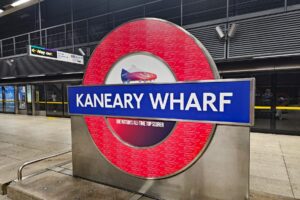
- A four-day Skechers takeover of Canary Wharf – KANEARY WHARF
- Summer of Sport at Canary Wharf, bringing together L’Oréal, Lululemon, Emmi, Doughlicious, Chipotle, Delta Capita and more under one activation programme
- Lynx and Dove’s World Cup fan zones
Behind each of those sits a small economy of its own: media owners, production companies, casting and talent teams, venue operators, security and logistics, experiential builders, PR agencies pitching angles to press, social teams cutting content in real time. Multiply that across every brand running a World Cup programme this summer, in every host city and fan zone. That way, you start to see how large and how invisible this layer really is.
Why it can’t be measured, and why that’s not the point
The Forbes piece is right that economic impact modelling is often less about accuracy than about justifying a decision that’s already been made. As Andrew Zimbalist put it: “a transfer of public spending to benefit private entities”. Tournament economics will keep producing headline numbers. Those numbers will keep being contested, revised down and picked apart by economists after the fact.
The agency and brand economy doesn’t have that problem, because it was never trying to produce a single number in the first place. It’s not one transaction; it’s hundreds of overlapping ones, briefs, pitches, activations, partnerships, running in parallel across every brand that wanted a piece of the moment. Its every agency brand using a moment in time to grow, to scale, to be relevant and have a moment. That’s precisely why it never shows up in a Treasury projection. Furthermore, it doesn’t appear in a tourism board’s press release. It’s precisely why it’s the part of the tournament we’d actually want to be measuring.
The scoreline decides how long the campaign runs. Everything else, who gets matched to who, which brief lands, which activation gets built in 48 hours instead of four weeks, is decided by agencies and brands making it happen in real time. That’s the World Cup economy that’s actually worth talking about. And to be honest, thats’ where the Ingenuity group comes into its own!
check out more of our case studies here
Sources: FIFA—Not U.S. Economy—Is Big World Cup Winner So Far, Forbes, July 14 2026; World Cup quarter-final expected to generate £500m sales boost for UK economy, The Guardian, July 1….